

Large group transportation in Denver can look deceptively simple. The Colorado Convention Center sits in a compact downtown district, Visit Denver lists more than 13,000 hotel rooms within walking distance, and many restaurants, venues, and sports facilities sit within a short ride of the convention core.
That is the map view. The meeting planner’s view is different.
A group may be split across three hotels. Some attendees may be close enough to walk while others need a scheduled pickup. A reception may end at the same time a game lets out. Weather can turn a reasonable walk into a shuttle need. A dinner return can become harder than the outbound ride because the group is tired, scattered, and leaving into late-evening traffic.
This guide is for convention planners, corporate event teams, meeting planners, and group coordinators managing Denver transportation around conventions, downtown hotels, off-site programs, sports outings, and event-night returns. If you are evaluating charter bus service in Denver, the goal is to help you shape the route, vehicle mix, and service window before the event day begins.
Table of Contents
What BusBank’s Denver Booking Data Shows
In our Denver metro corporate bookings, groups ranged from 20 to 250 passengers, with a median group size around 57. Many Denver groups are modest enough for a mini bus or smaller segmented service. The larger cases need coach-level capacity, tighter dispatch planning, and a more deliberate return plan.
The vehicle mix points in the same direction. Mini buses and coach-class vehicles appeared at nearly the same rate in this Denver slice. For planners, that means the Denver plan should start with the structure of the day before the vehicle type is chosen.
The patterns that repeat across the Denver bookings include:
| Booking pattern | What it means for the transportation plan |
| Hotel pickups | The hotel block often shapes the route more than the destination does. |
| Sports outings | The return after the game needs as much planning as the outbound ride. |
| Dinner returns | Evening service often needs a clear pickup time, a wait plan, or hourly coverage. |
| Multi-hotel activity shuttles | One destination can still require several pickup points and return waves. |
| Destination-based trips | Longer outings need buffer time and a service window that can absorb delays. |
| Multi-hour service | The vehicle may need to stay available through the event, then handle the return. |
The pattern is practical: Denver groups often start from hotels or offices, move to games, dinners, meetings, or off-site activities, and need a return plan that still works after the event ends.
Start With The Return Window
For Denver group transportation, the outbound ride is often the easier half of the job. The group is assembled, the departure time is known, and the destination is clear. The return has more variables.
At the end of a dinner, game, reception, or off-site program, attendees may leave in waves. Some people move slowly, some head to rideshare, some wait inside, and some look for the bus before the bus can legally or practically pull into position. If the plan only solved the outbound ride, the return is where that gap shows up.
In our Denver bookings, this comes through clearly. Coors Field outings required hotel pickup and return after the game. A Topgolf-style outing involved several hotel pickup stops and return service back to those hotels. One Denver dinner movement had a planned evening pickup around 9:00 PM. Another Coors Field example used two departure waves and two return times.
Those are different trips, but the planning lesson is the same: build the day around how the group gets back.
Before the event starts, the planner should know:
- where the return pickup happens
- whether everyone returns at once or in waves
- how attendees will identify the correct vehicle
- whether the vehicle waits, stages nearby, or returns at a set time
- what happens if the event ends early or runs late
- how the plan changes if weather or event traffic slows the return
That return-first approach keeps the shuttle plan from having to be rebuilt at the curb.
How The Colorado Convention Center And Hotel Geography Shape The Plan
The Colorado Convention Center is the natural anchor for many Denver group transportation plans. The building has 577,000 square feet of exhibit space, 63 meeting rooms, three ballrooms, a 5,000-seat theater, and more than 13,000 hotel rooms within walking distance.
That proximity helps, but the planning work still matters. Downtown hotels near the Convention Center may work for a smaller group with a flexible agenda. A larger group, a formal event, an early general session, an accessibility need, or a weather-affected day changes the calculation. A hotel that looks close on a map may still need scheduled transportation if the group has to arrive together.
Denver hotel geography also extends beyond the immediate downtown core. Planners may be working with:
| Area | Transportation issue |
| Colorado Convention Center/downtown core | Short distances, but timed arrivals and curb coordination still matter. |
| LoDo / Union Station / Coors Field | Strong for dinners, receptions, and games, with event-night return pressure. |
| Airport-area and Aurora hotels | Useful for arrivals and large properties, but less efficient for repeated downtown movement. |
| DTC / south metro | Corporate bases and hotels that add highway timing to downtown events. |
| North-metro hotel clusters | Multi-hotel pickup sequencing can become the main planning problem. |
The downtown area has more than 13,000 rooms within walking distance of the Convention Center, with more than 55,000 rooms across the metro area. Large events can still spill across multiple properties and districts, so the hotel block should be mapped before the shuttle model is chosen.
Running The Convention Hotel Shuttle
Once the hotel geography is clear, the shuttle plan needs to answer one question: how will attendees move without slowing the event day?
For some groups, the answer is a few fixed departures. For others, especially when arrivals are spread across several hotels or a registration window, a continuous loop may be cleaner. The wrong choice usually shows up in one of three ways: people wait too long, one hotel delays every stop after it, or the loop becomes so long that the first passengers lose time riding through the entire route.
For a convention hotel shuttle, planners should decide:
- which hotels can reasonably walk, which need scheduled pickup
- which hotels should share a route
- whether a central pickup point is cleaner than multiple hotel doors
- whether service should run as fixed departures or continuous circulation
- how return service works at the end of the day
A central pickup can work well when several hotels are close together and curb space is limited. Door-to-door pickup may be better when attendees have accessibility needs, when weather is poor, or when the hotels are too spread out for one gathering point.
The morning and evening should also be treated differently. Morning service is usually built around session start times, badge pickup, and keeping the group moving toward the same destination. End-of-day service has more dispersal. Some attendees leave immediately, some stay for networking, and some move to dinner or another event. The return plan needs to reflect that difference.
Our Denver data supports this operational view. We saw multi-hotel pickup for a structured group activity, downtown hotel-to-event movement, sports outings with returns, and larger roundtrip programs in the Denver area. Vehicle availability is only the starting point. The plan works when the vehicle, route, and schedule match the way the group day actually runs.
When Walking, FreeRide, Or Public Transit Can Help
Denver’s downtown layout gives planners more options than many cities. Walking can work for nearby hotels. RTD’s 16th Street FreeRide runs free service between Union Station and Wade Blank Civic Center Station, with buses operating every 4 to 12 minutes depending on time of day.
That can be useful for individual attendee movement inside downtown. It can also help planners reduce short-hop shuttle demand when the group is small, flexible, and comfortable moving independently.
Private group transportation still matters when the schedule requires control. It is usually the cleaner choice when:
- the group needs to arrive together
- the hotel block is split across several properties
- attendees are dressed for a formal event
- the event ends after dark
- weather affects walking comfort
- accessibility needs are part of the plan
- the destination sits outside the downtown transit spine
- the return needs to be controlled after a game, dinner, or reception
The practical approach is to use walking and public transit where they truly reduce complexity, then use private shuttles for the movements where timing, group cohesion, and return control matter.
Common Use Cases For Large-Group Transportation in Denver
Denver group transportation usually fits one of several operating patterns.
| Use case | What the planner needs to solve |
| Convention hotel shuttles | Frequency, hotel grouping, loading points, and attendee flow. |
| Multi-hotel pickup plans | Stop order, pickup timing, and whether one route is trying to do too much. |
| Hotel-to-dinner transportation | Evening return timing and whether the vehicle should wait or come back. |
| Museum or reception venue shuttles | A clean move from the conference base to a defined event window. |
| Sports outings | Group regrouping after the game or event ends. |
| Topgolf-style activities | Several pickup points, a defined activity window, and a structured return. |
| Red Rocks or destination outings | Longer service windows, travel buffers, and late return planning. |
| Airport-area hotel movement | Longer repeated trips into downtown and less predictable timing. |
| VIP or executive add-ons | Smaller vehicles and separate schedules for leadership or client movement. |
Each use case changes the transportation decision. A convention loop is about frequency. A dinner shuttle is about return timing. A sports outing is about regrouping after the event. A Red Rocks or destination trip is about keeping enough time in the service window. Treating all of these as one kind of charter booking is where plans become thin.
Sports And Event-Night Outings: Coors Field, Ball Arena, And Empower Field
Sports outings are one of the clearest patterns in our Denver booking data.
Coors Field appears repeatedly, with groups moving from hotels or event bases to the game and returning afterward. In our Denver bookings, we saw downtown hotel-to-Coors Field movement, Aurora-area movement tied to a Rockies game, and one Halcyon example that used two departure waves and two return times after the game.
The same planning logic applies to Ball Arena and Empower Field at Mile High. A group may be going to a Rockies game, an NBA game, an NHL game, a Broncos game, or a concert. The hard part is usually the release after the event.
For sports and event-night transportation, planners should decide:
- whether the group boards from one hotel, several hotels, or an office
- how early the vehicle should arrive before game or show time
- where the group meets after the event
- whether the return runs in one wave or multiple waves
- how long the vehicle should remain available
- how attendees receive return instructions before the event starts
Short distance does not automatically make the plan easy. A downtown hotel to Coors Field can be a short ride. The return can still fail if half the group exits through a different gate, the pickup point is vague, or the vehicle cannot wait where attendees expect it.
The best event-night plans are specific before the first passenger boards. The group should know where to meet, when the bus leaves, and what to do if they miss the first return.
Off-Site Venues And Group Activities Around Denver
Off-site events can be the best part of a convention or corporate program. They can also expose weak transportation planning quickly. The useful way to think about Denver off-sites is by transportation behavior first.
| Destination type | Transportation planning issue |
| Denver Art Museum and Golden Triangle venues | Short shuttle windows from downtown, with pickup and return timing tied to a reception or event block. |
| Denver Museum of Nature & Science and City Park-area programs | A longer local move where group arrival and return instructions need to be clear. |
| Denver Union Station | Shared curb activity, pedestrian movement, transit traffic, and private-event timing. |
| RiNo, dinner, and brewery districts | Smaller groups, segmented service, and late-evening return control. |
| Topgolf-style outings | Defined activity windows with hotel or office returns. |
| Red Rocks Park & Amphitheatre | Longer travel time, venue access planning, and late return discipline. |
| Georgetown or outdoor-oriented day trips | Longer service windows and more buffer than a downtown transfer. |
The first-party Denver data includes Topgolf-style outings, museum or cultural-event movement, Coors Field trips, dinner shuttles, and destination-based outings. Each one behaves differently. A Denver Art Museum reception may need a short, tight shuttle window. A Red Rocks event needs a longer plan. A RiNo dinner may benefit from smaller vehicles or a staged return. A Union Station event needs clear curb and pedestrian instructions because the venue also sits inside a working transit environment.
The planning question should always be the same: how does the destination change pickup, waiting, and return?
Choosing The Right Service Model
Service model matters as much as vehicle type in Denver.
| Service model | Best fit |
| One-way transfer | Airport arrivals, hotel-to-event moves, or a single scheduled movement. |
| Roundtrip transfer | Games, dinners, receptions, and fixed-end activities. |
| Hourly service | Events with uncertain end times, dinners that may run long, or multi-stop evenings. |
| Continuous shuttle loop | Convention hotel movement, open arrival windows, or repeated hotel-to-venue circulation. |
| Multi-vehicle program | Groups split across hotels, different return waves, or events that need both capacity and flexibility. |
One-way transfers are clean when the group only needs one move. Roundtrips work when the return time is clear. Hourly service is safer when the event may shift, because the vehicle remains part of the plan. Continuous shuttles are useful when attendees move across a broader boarding window.
Multi-vehicle service becomes important when the route itself is the issue. One large vehicle can be efficient for a consolidated group. It can also become slow if it has to stop at too many hotels or return in several waves. In those cases, smaller vehicles or a mixed plan can move the group with less waiting.
The simplest planning rule is this: choose the service model after you understand the return.
Choosing The Right Vehicle Mix
Denver’s first-party booking data supports a balanced vehicle mix, with mini buses and motorcoaches appearing at nearly equal rates. Coach-class vehicles matter when the group is consolidated or the service window is longer. Smaller vehicles matter when the group is segmented or the pickup points are tighter.
A mini bus usually fits smaller and mid-size groups, hotel pickups, office departures, dinner shuttles, and activity runs where the group does not need a full coach. It is also useful when several vehicles can split the movement more cleanly than one large vehicle trying to cover every stop.
A motorcoach is better when the group is large enough to consolidate, when comfort matters over a longer route, or when the goal is to move the most passengers in fewer loading cycles. Sports outings, airport-area hotel moves, Red Rocks-style destination trips, and larger convention movements can all justify coach-class service.
A sprinter van fits the smaller end of the plan: leadership teams, VIP guests, site visits, or add-on movement that runs separately from the main group.
For many Denver events, the right answer may be a mixed fleet. A coach can handle the main group. Mini buses can cover secondary hotels or smaller return waves. A sprinter can support executives or guests on a separate schedule. The decision should follow group size, hotel spread, route access, event timing, and whether the vehicle needs to wait or circulate.
Denver Constraints To Confirm Before Event Day
This section should stay practical. A few operational details still need to be confirmed before service starts.
| Item to confirm | Why it matters |
| Colorado Convention Center loading and staging guidance | A convention shuttle needs a workable pickup and drop-off plan tied to the venue address. |
| Hotel pickup points | The best curb may differ from the hotel entrance attendees use. |
| Venue access rules | Sports venues, museums, Red Rocks, and Union Station-style venues may handle buses differently. |
| DEN charter bus procedures | Airport-area movement needs coordination around arrivals, luggage, and where vehicles can load. |
| RTD and 16th Street FreeRide conditions | Useful for downtown individual movement. Controlled group service still needs its own plan. |
| Weather buffer | Snow, storms, heat, or wind can change walking assumptions and route timing. |
| Waiting or staging plan | Vehicles may need to relocate between drop-off and return pickup. |
| Accessibility needs | Stop choice, loading time, and vehicle selection may need to change. |
The research files for this article included very specific claims about loading zones, idling rules, Express Lanes, Red Rocks lots, DEN pickup doors, and Coors Field bus parking. Those details should be verified directly from official sources before publication if they are used. For the article draft, the safer and more useful advice is this: confirm the rule that applies to the exact venue, date, and service window before the plan is finalized.
Denver Booking And Operations Checklist
Before the trip, the transportation plan should lock down the items below.
| Planning item | Why it matters in Denver |
| Final headcount | Vehicle choice and route timing depend on the real passenger count, not the early estimate. |
| Hotel list and pickup points | A group split across hotels needs stop sequencing before event day. |
| Walking vs. shuttle decision | Downtown proximity helps, but weather, formal attire, accessibility, and timing can change the answer. |
| Service model | One-way, roundtrip, hourly, and continuous shuttle service solve different problems. |
| Return plan | Games, dinners, and receptions often become harder after the event ends. |
| Vehicle mix | Mini buses, motorcoaches, and sprinters each fit different parts of the same event plan. |
| Staging or waiting plan | The vehicle may not be able to sit at the most obvious curb. |
| Venue access confirmation | Convention centers, stadiums, museums, and Red Rocks-style venues can have different operating rules. |
| Weather buffer | Denver conditions can change the walking plan and the driving schedule. |
| Onsite contact | A named person should be able to confirm when the group is ready to board. |
This checklist is useful because it keeps the planner focused on the actual failure points: incomplete hotel information, vague return instructions, unclear waiting plans, and vehicle choices made before the service model is understood.
Denver Group Experiences That Fit Around A Transportation Plan
Once the hotel pickups, event schedule, and return plan are set, groups usually prefer to explore Denver around the main program. Our partner Viator offers several experiences that can work well for corporate groups, convention attendees, and smaller breakout groups.
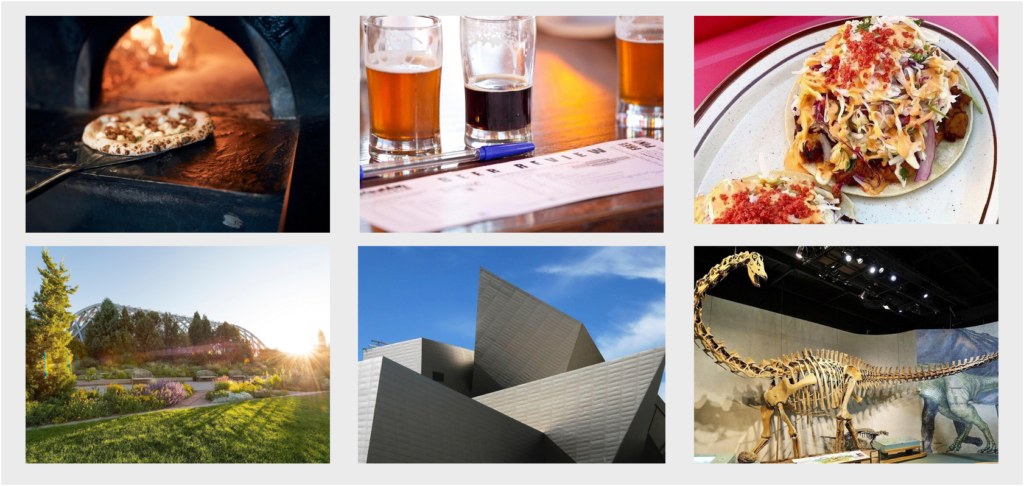
The strongest fits are fixed venues, walking experiences, food and drink outings, and admission-style activities, a few of which are listed:
| Experience | Best for | Why it works with group transportation |
| Downtown Denver Food Tour | Client hosting, smaller team outings, post-session food experiences | The activity stays concentrated in the downtown area, which makes it easier to plan one arrival window and one return pickup. |
| Lower Downtown Craft Beer Walking Tour | Casual team socials, post-conference groups, LoDo-based hotel blocks | The group can be dropped near the starting point and picked up after the tasting window, keeping the outing simpler than a custom multi-stop route. |
| Denver RiNo Small-Group Foodie Tasting and Walking Tour | Creative teams, smaller breakout groups, informal evening add-ons | RiNo works best when the group is treated as a neighborhood-based outing. A planned arrival and return keep the evening from spreading across too many pickup points. |
| Denver Botanic Gardens | Lighter afternoon programs, partner outings, relaxed off-site blocks | This is a fixed-location activity with a flexible visit window, so the transportation plan can stay simple: one drop-off, one pickup, and enough time onsite. |
| Denver Art Museum tickets | Reception-adjacent outings, cultural programming, leadership groups | The museum fits naturally with a downtown or Convention Center itinerary. It works best when the arrival and return are treated as a defined event window. |
| Denver Museum of Nature & Science tickets | Family-friendly groups, education-adjacent programs, daytime attendee outings | The venue gives planners a clear destination and a manageable pickup plan, especially when the group needs a structured daytime activity away from the hotel block. |
The main filter is simple: choose the add-ons that keep the transportation plan legible. If the experience has a defined location, a reasonable duration, and one clear return point, it can fit into the group schedule cleanly.
In Summary
Denver group transportation works best when the plan starts with the structure of the day.
The route matters, but the route alone does not solve hotel pickups, return waves, sports-event dispersal, dinner timing, weather, or destination trips. In our Denver bookings, the recurring pattern is practical: groups need a vehicle plan that matches where people start, how they move, and how they get back.
When the pickup sequence, service model, vehicle mix, and return window are settled before event day, transportation stays in the background where it belongs.
FAQs
How should planners set up hotel shuttles for the Colorado Convention Center?
Start with the hotel map. Identify which properties can walk, which need a scheduled pickup, and which can be grouped into the same route. Then decide whether the event needs fixed departures or continuous circulation. The larger or more spread-out the hotel block is, the more important it becomes to keep routes short and pickup instructions specific.
Is downtown Denver walkable enough to skip shuttle service for a convention group?
Sometimes. Visit Denver lists more than 13,000 hotel rooms within walking distance of the Colorado Convention Center, so walking can work for smaller, flexible groups in good conditions. Shuttle service becomes more useful when the group is large, split across properties, dressed for an event, operating on a tight schedule, or dealing with weather or accessibility needs.
When should a Denver group use a mini bus or a motorcoach?
A mini bus often makes sense for smaller and mid-size groups, repeated hotel pickups, dinner transportation, or activity runs where flexibility matters. A motorcoach is usually better when the group is consolidated, the passenger count is higher, or the trip is longer. Headcount matters, but the route, pickup pattern, and return plan should shape the decision too.
What is the best transportation setup for Coors Field group outings?
For Coors Field outings, plan the return before the game starts. The group needs a clear pickup point, a departure window, and instructions that attendees receive before they leave the venue. If the group is split across hotels or leaving in waves, more than one vehicle or more than one return time may be cleaner than forcing everyone into a single departure.
How should planners handle returns after a Denver dinner or reception?
Decide whether the return is fixed or flexible. If the dinner has a firm end time, a roundtrip may work. If the event may run late, hourly service can be safer because the vehicle remains tied to the group. Either way, attendees should know the pickup point and return time before the event begins.
How do airport-area hotels change a Denver convention transportation plan?
Airport-area hotels can be practical for arrivals and departures, but they are less efficient for repeated downtown movement. If attendees are staying near DEN or in Aurora and attending downtown events, the plan needs longer service windows and more realistic buffers than a downtown hotel loop.
When is hourly charter service better than a roundtrip transfer in Denver?
Hourly service is better when the event end time may move, when the group has several stops, or when the planner wants the vehicle available through the program. Roundtrip service is cleaner when the return time and pickup point are known in advance.
What should planners consider before moving a group to Red Rocks?
Red Rocks is a destination outing, so the plan needs more than a pickup and drop-off time. Confirm current venue access rules, parking or staging guidance, travel time from the hotel base, and the return plan after the event. The late return is usually the part that needs the most discipline.
How should multi-hotel pickups be planned in Denver?
Group hotels by geography and pickup practicality. A single route that covers too many stops can create long waits and late arrivals. When hotels are spread across downtown, north metro, airport-area, or south metro locations, separate waves or a central pickup point may work better than one long loop.
What official venue or city rules should planners confirm before a Denver event?
Confirm the current rules for the exact locations involved: Colorado Convention Center loading, sports venue bus access, Red Rocks vehicle guidance, DEN charter pickup procedures, hotel curb access, and any waiting or staging restrictions. Rules and operating conditions can change, so the final check should happen close to the event date.